An imprint is a skill slot on a unit, and units fill those slots by absorbing. Slots start locked on Normal-grade units; players report that a Prism unit arrives with all of them open. The stat inside is random, and the tiers players quote — Common, Uncommon, Rare, Legendary — are community usage, not an official table.
Imprints are where the absorption loop pays you back. Every unit you feed into another is a chance to open a skill slot on the recipient and put something in it. That is why two copies of the same unit at the same star can behave differently, and why a guide can only give you a direction.
What an imprint is
Imprints are unit skill slots filled by absorbing (community guide). The recipient gains a level, and the slots on it are part of the growth loop rather than a shop purchase. There is no Essence price and no item slot involved. You pay with units, which means every imprint decision is also an army-size decision.
Which units have open slots
Treat the Prism line as a report rather than a rule. It comes from one player account and has not been reproduced in a controlled comparison. The safe version: Normal units start locked, and Prism units are reported to start open. If you are planning around a Prism, check it in the Collection before feeding anything into it.
The tiers players quote
Community usage sorts imprints into Common, Uncommon, Rare and Legendary. The vocabulary is consistent across guides; the underlying numbers are not published anywhere we could verify. Use a tier to decide what to keep when a slot has to be spent, not to predict what a slot will roll.
What to look for, by role
| Role | Direction | Why it helps |
|---|---|---|
| Damage dealer | Debuff and crowd control: blind, bash, poison, knockback, execute, chain | A delayed enemy deals less damage, which also buys your healer time. |
| Tank or frontline | Block, Enlarge | The wall’s first job is to absorb the opening hit; both extend how long it can. |
| Sustain | Lifesteal | Community advice rates it highly on units that already hit hard enough to heal themselves. |
| Support | Anything that keeps the frontline standing | A healer that dies to a stray hit is not a healer. |
Random stats and the reroll problem
Random stats create a temptation: imprint everything, then regret half of it. Two rules keep the cost down. Do not imprint a unit you are about to feed into something else, because the slot dies with it. And do not chase a perfect roll on the unit already carrying — the marginal gain is smaller than the slot you could open on your second unit.
How to check before you commit
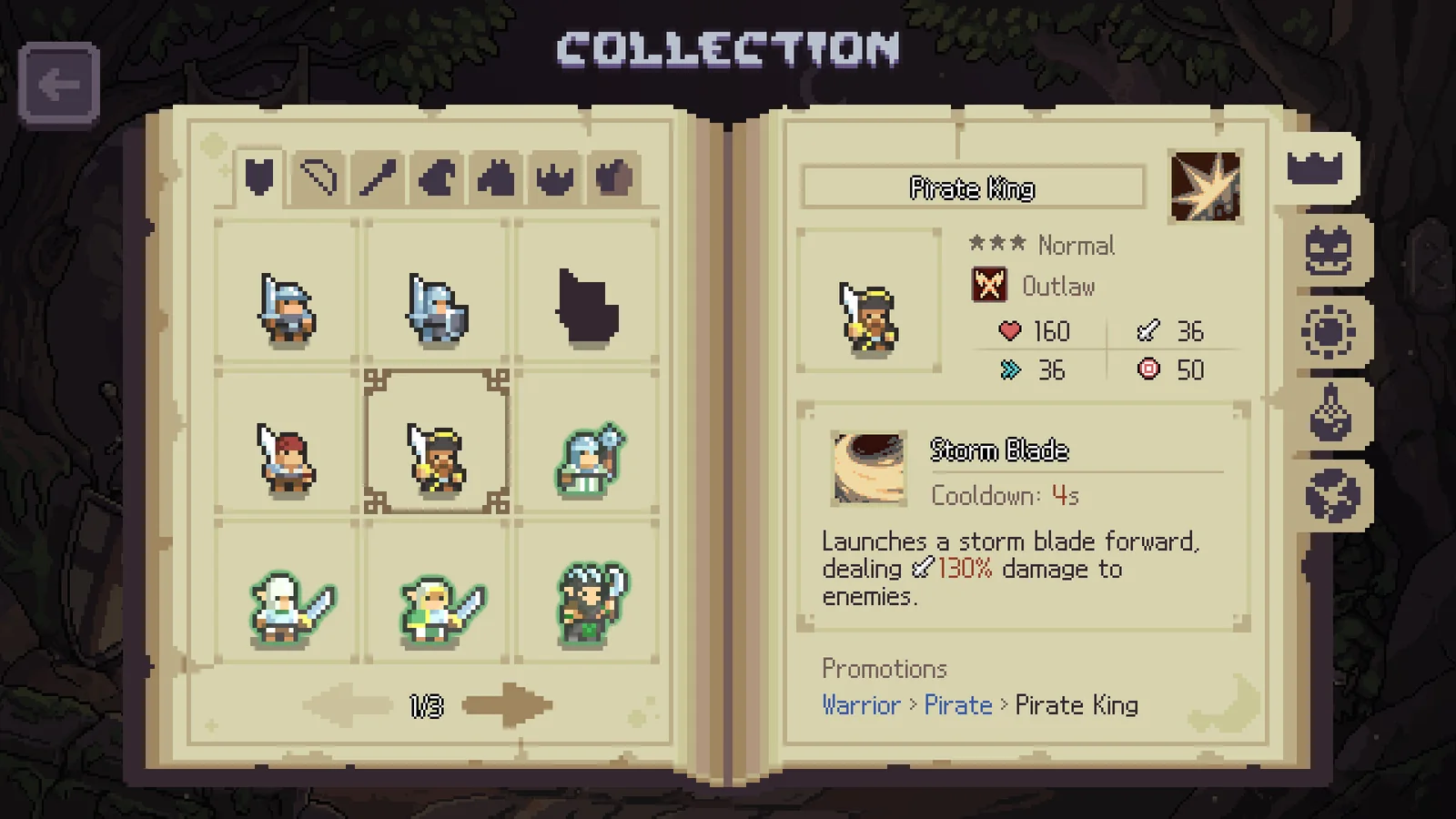
The Collection opens during a run with C or the View button (official patch), and it records units as you meet them. That makes it your most reliable reference for what a unit can hold before you feed a good slot into a worse one. Mid-run checking beats post-mortem reading.
Read the absorption loop before your next feed, then the community tier list for what players value on the units you are imprinting.
FAQ
How do I unlock imprint slots?
By absorbing units into the one you want to build. Slots are part of the growth loop rather than a shop purchase, and Normal-grade units start with them locked according to community documentation.
Do Prism units really have every slot open?
That is a player report, not an official statement. It is plausible given that Prism sits at the top of the rarity ladder, but it has not been reproduced in a controlled test. Check the unit in the Collection before building a plan on it.
What is the best imprint?
There is no single answer. Damage dealers want debuff and crowd control, tanks want Block or Enlarge, and Lifesteal is highly valued on units that already hit hard. The best imprint fixes the way your army usually loses.
Cores explained
What a Core changes, how many you can hold, and why the boring pick beats the legendary one.
Cores explained
What a Core changes, how many you can hold, and why the boring pick beats the legendary one.
Best cores
Eight Cores that earn a slot without asking you to change how you play — and the ones to leave on the shelf.