Items are bought with Essence and stay with the army for the run. Community data puts the starting allowance at six slots, expandable to eight, with three offers that refresh every two waves. Buy the item that answers a weakness you have already seen twice, not the one that completes a set you have not triggered.
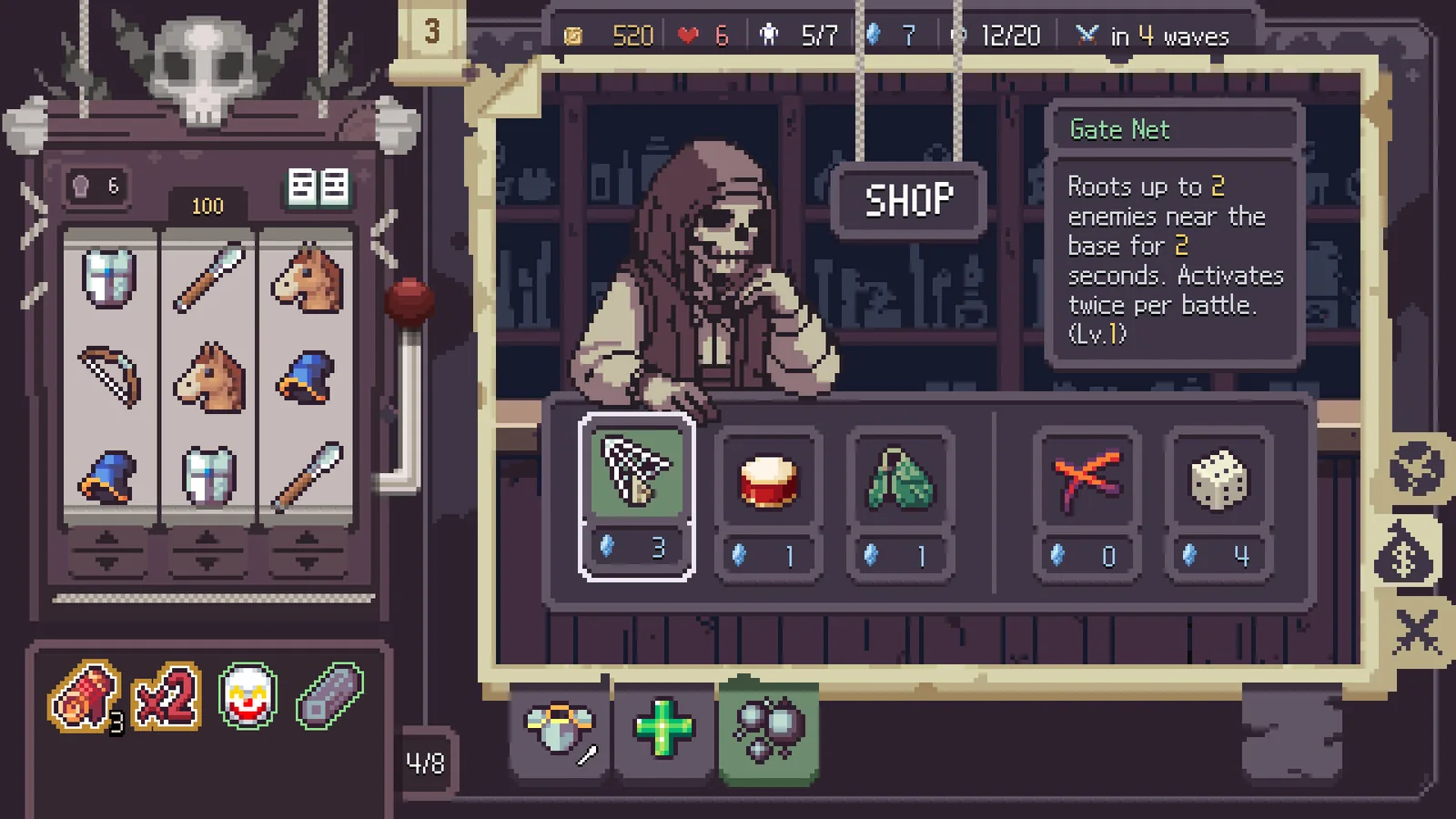
Items are the part of a run that survives a bad board. A strong roll can win you wave six; an item bought on wave three can keep that unit alive on wave nine. The shop is also where Essence disappears: three offers with a timer feel like three decisions but are really one — does this fix something?
Items and Cores are not the same purchase
Cores change what the machine pays. Items change how the fight goes. Community counts put the pool at 63 items, far more than one run’s shop will show you. An item is only worth buying when you can name the fight it changes: a frontline that dies to burst, a wave that outlasts your damage. If you cannot name the fight, you are buying a stat, and stats are cheap.
Re-buying the same item levels it up rather than taking a second slot (community data). That changes how you read a boring offer: the item you skipped two visits ago may be the upgrade you want now.
Slots, offers and the refresh clock
Since v1.0.1 the Shop button shows the refresh countdown (official patch note). Check it before you reroll. Rerolling into a refresh you were about to get free is the most common way to waste Essence in the first ten waves, and now entirely avoidable.
The five jobs an item can do
| Role | What it fixes | Take it when |
|---|---|---|
| Defense | A front-liner dying to burst before it acts. | Before a Judgment or boss, not after one. |
| Sustain | Fights that outlast your army rather than out-damage it. | Your frontline survives but the wave does not end. |
| Ranged damage | A backline that cannot punish anything. | You have a screen and nothing behind it. |
| Melee damage | A wall that cannot kill. | You survive every wave and still lose on damage. |
| Economy | Gold starvation in the middle of a run. | You are short of one spin, not five. |
Five buying rules
- Cover a weakness you have seen twice. Once is noise, twice is a pattern, three times is the wave that ends the run.
- Complete a slot, do not start a seventh. At six slots, a new synergy competes with an existing one for the same fight.
- Buy before the check, not after. A purchase made after a lost Judgment happens in the upgrade tree, not the shop.
- Hold across a refresh if it is one wave away. Essence kept for two waves buys better than Essence spent on a reroll.
- Sell on purpose. Selling one item to buy the same role is a 50% tax on indecision.
Levels and the seventh-synergy trap
Because re-buying levels an item, a narrow shop is less punishing than it looks: the offer you passed last visit can become the upgrade you want now. A level-two item in a slot you use beats two level-one items in slots you do not.
The 80% upgrade
Selling returns half of what you paid, or 80% with the upgrade (community data). That upgrade is one of the better economy purchases in the tree: it turns every later mistake from a 50% loss into a 20% one. If you reroll and resell often, it pays for itself.
For the board side of the same budget, read how Cores change a board and the spin economy. Most Essence leaks between those two decisions.
FAQ
How many item slots does Slotbound have?
Community data puts the starting allowance at six, with the upgrade tree able to raise it to eight. The cap is community-reported rather than officially published, so check your own upgrade tree before planning around eight.
Should I reroll the shop?
Only when the refresh is more than one wave away and none of the three offers touches the weakness you have. The reroll price climbs with each use in a visit, so a second reroll is usually worse than waiting.
What happens when I sell an item?
You get half of what you paid back, or 80% with the sell-value upgrade, both community-reported figures. The slot frees immediately, which is the actual reason to sell mid-run.
Cores explained
What a Core changes, how many you can hold, and why the boring pick beats the legendary one.
Spin economy
The price ladder, the six-spin allowance and the test that tells you to keep your gold.
Imprints
The skill slots you fill by absorbing, the tiers players quote, and why the number inside is the least important part.